A sauna and a massage are different tools, not rivals. A massage is hands-on, targeted work: a person finds the tight spots and works them. A sauna is passive, whole-body heat you can use often and cheaply on your own. For relaxation, both deliver, and a massage adds focused tension release and human touch while a sauna adds a whole-body wind-down you can repeat any day. For recovery, a massage handles a specific tight area or problem spot, while a sauna supports whole-body circulation and carries the deeper research base. So the better question for most people is not which one, but how to use both, and in which order.
| Factor | Massage | Sauna |
| Approach | Hands-on, targeted | Passive, whole-body heat |
| Best at | Specific knots, tight spots, injury | General stress, circulation, frequency |
| Cost and access | Per session, needs a therapist | Cheap and repeatable once you have access |
| Personalization | Adjusted to you by a person | Same for all; you set time and heat |
| Recovery role | Targeted soft tissue | Systemic blood flow |
| Relaxation | Touch and focused release | Whole-body calm, repeatable |
What a massage is better at
A massage wins on precision. A therapist can find a specific knot, a tight band, or a sore area and work it directly, which is something no amount of heat can do on its own. That makes it the better call for a particular problem spot, a nagging injury, or tension that lives in one place. The hands-on element matters too, since touch itself calms the nervous system in a way a warm room does not, and the session is adjusted to you in real time.
The trade-offs are practical. A massage costs money per session, it needs a booking and a person, and it is not something most people do several times a week. The evidence is strongest for short-term relaxation and easing felt tension, and more mixed on performance and next-day soreness. As a targeted, occasional treatment, it is hard to beat. It is the tool you book when something specific needs attention, not the one you lean on every day.
What a sauna is better at
A sauna wins on reach and repeatability. The heat works the whole body at once, lifting circulation and helping you unwind, and because it is cheap and self-serve you can use it often, which is where the real benefits build up. There is no appointment and no second person involved. The relaxation is whole-body rather than targeted, and the research base behind regular sauna use is deeper than the one behind massage, especially for circulation and recovery.
The limit is the flip side of its strength: a sauna cannot dig out one specific knot. It warms and loosens everything evenly, which is great for general stiffness and stress but will not fix a single tight spot the way a thumb can. For the relaxation side, see sauna benefits for mental health, and for why frequency matters, how often you should sauna. Think of them as complements: the massage fixes a spot, the sauna maintains the whole.
So which is better for relaxation and recovery
It depends on the need, not on which one is better in the abstract. If you have a specific tight spot, a knot, or an injury, a massage is the better tool. If you want general stress relief, whole-body stiffness eased, and something you will actually do on a regular basis, a sauna is the better tool and the cheaper one. For most people, though, the honest answer is both, used together, which is where the real question comes in: the order. It tends to be the cheaper path over time too, since one targeted massage a month alongside regular sauna sessions covers more than either on its own.
Sauna before or after a massage
This is what people actually search, and the short answer is that it depends on your goal and the kind of massage. Using a sauna before a massage warms and loosens the muscles and the fascia around them, so the therapist meets less resistance and can work deeper, and you settle onto the table already relaxed. Keep that pre-massage session short and easy, around 10 to 15 minutes rather than a long draining one, drink water, and tell your therapist you have been in the heat. For how to pace a single session, see how long to stay in a sauna.
Using a sauna after a massage is more about stretching out the calm and keeping blood moving once the work is done. It suits a relaxation-style massage, where the point is to stay unwound rather than to warm up for deep work. One thing worth saying plainly: the popular line that a post-massage sauna flushes toxins is not how it works. Sweat is not detox. The real reasons to pair them are warmth, circulation, and holding onto a relaxed state, which is enough on its own. One case flips the default: for a lymphatic drainage massage, the usual advice is sauna after rather than before, since that style guides fluid in a set direction and heat beforehand can work against it.
The order that fits each massage type
| Your massage | Better order |
| Deep tissue, sports, very tight muscles | Sauna before, to warm the tissue |
| Swedish, relaxation, hot stone | Sauna after, to extend the calm |
| No strong preference | Either; sauna first is the usual spa-combo flow |
The pattern is simple: heat before helps the hands-on work go deeper, and heat after helps the relaxation last. If you are stacking either one around exercise as well, the heat-timing logic there is its own topic, covered in sauna before or after a workout.
What to do before a massage
A few simple things keep a sauna-and-massage day from backfiring. Drink water in the hours beforehand, since both heat and deep work pull fluid out of you and showing up dehydrated is the fastest way to feel rough afterward. Do not treat the pre-massage sauna as a workout; a short, easy warm-up is the goal, not a long sweat that leaves you drained before the table. If you are getting a deep-tissue session, go especially easy on the pre-massage heat, because deep work on already-overheated, tender muscles is more than most people want. Eat lightly rather than going in on a heavy meal or an empty stomach, and give your therapist the useful details up front: that you have been in the heat, where you are tight, and anything about your blood pressure or health they should know.
The caution nobody leads with
A hot sauna straight after a deep, intense massage, when you are already a little dehydrated and your tissues are tender, is the usual reason people feel woozy or washed out after a spa combo. If you do sauna after, keep it short and gentle, drink water before and after, and step out the moment you feel lightheaded. Mind this more if you have blood-pressure or heart concerns, where our notes on saunas and blood pressure and who should avoid the heat are worth reading first. None of this makes the pairing a bad idea; it just means the post-massage sauna is the one to keep light.
Pairing the two at an event or at home
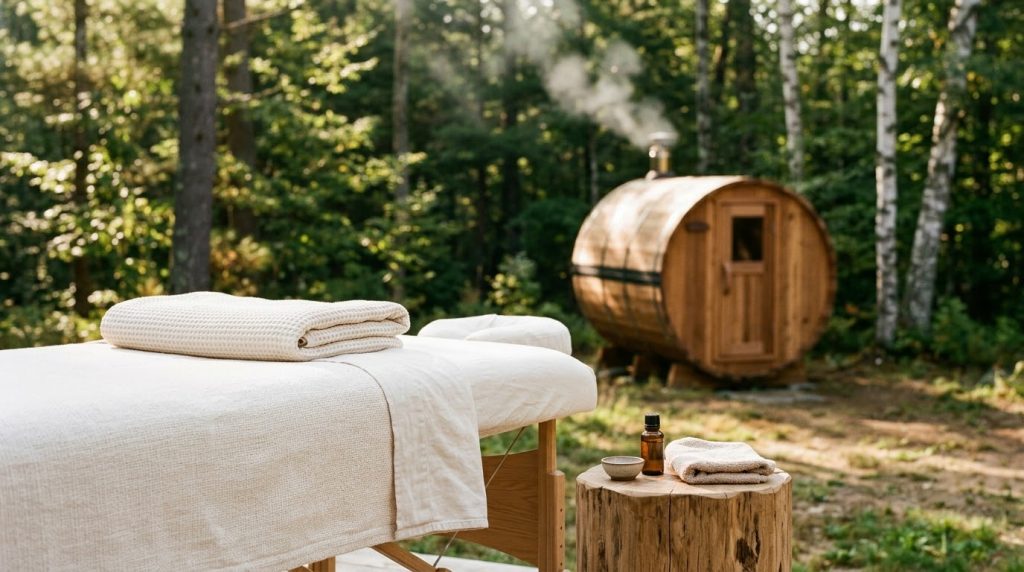
Sauna and massage pair naturally beyond the spa. For a wellness day, a team recovery session, or an event, a mobile sauna can warm people up before massages or sit alongside a therapist as the relaxation station, so guests move between heat and hands-on work at their own pace, and groups tend to like having both on hand since not everyone wants the same thing on the day. At home, the same logic applies around your own appointments: a short sauna before a deep-tissue session, or a gentle one after a relaxation massage.
If you are planning something like that, a rental makes it easy to bring the heat to wherever the massages are happening. You can check available dates or look over the rental packages and set it up around the schedule.
The short version
Reach for a massage when the problem is a specific spot, and a sauna when you want whole-body relaxation and frequent, low-cost recovery. You do not have to choose: sauna before a deep-tissue massage to warm the muscles, sauna after a relaxation massage to stretch out the calm, drink water through both, and keep any post-massage sauna short and gentle.