
Yes, and plenty of runners do, for two different reasons: to recover and relax tired legs, and to train their body to handle heat, which can help endurance. The catch is that you finish a run already hot, sweaty, and low on fluid, so the after-run sauna is the one to time with a little care. Cool down, drink, keep it on the shorter side, and it is a good pairing. Walk straight from the finish into the heat while your heart is still pounding and you are dried out, and it works against you.
Two reasons runners use a sauna after a run
It helps to be clear on which one you are after, because they call for slightly different approaches. The first is plain recovery: warmth to loosen tired legs, lift circulation, and wind down after the effort. The second is heat acclimation, which is the running-specific reason and the one the training crowd gets excited about: regular heat exposure teaches your body to cope with heat, and that can carry over into endurance and into racing on a hot day. One is about feeling better now; the other is a training tool.
A sauna after running for recovery
On the recovery side, the heat relaxes muscle, raises blood flow, and simply feels good on legs that have just put in miles. Be honest about the size of the effect, though, since the evidence that a sauna speeds muscle recovery is modest rather than dramatic. Treat it as a pleasant, low-risk add-on to the things that actually move recovery, not a substitute for them. For runners specifically, the heat can take the edge off that heavy-legged, stiff feeling the morning after a long run, which is as much about comfort as anything measurable. The general recovery case and the heat-timing-around-exercise question are covered on sauna for muscle recovery and sauna before or after a workout, so this page stays on what is specific to running.
A sauna after running for heat acclimation and performance
This is the part that makes a post-run sauna more than a nice-to-have. Sitting in the heat soon after a run adds a bit of heat stress on top of the run, and over a few weeks the body adapts the way it does to training: among other changes, it expands blood plasma volume, which supports endurance and helps you run better in the heat. A small study of distance runners found that short sauna sessions after running, over about three weeks, expanded plasma volume and improved their run time to exhaustion. It is a small study, so hold it loosely, but it lines up with why heat acclimation is a standard tool for athletes heading into a hot race. The payoff shows up most on a hot race day, when a body used to the heat can hold its pace while others fade, and the training crowd treats a post-run sauna as close to free fitness for that reason. The honest version is that it is a modest, gradual gain rather than a shortcut.
If that is your goal, the studied pattern is a short sauna soon after running, a few times a week, run as a block in the weeks before a hot target race rather than year round. Keep the sessions modest, not heroic, and build the heat tolerance gradually. For how to think about session frequency in general, see how often you should sauna.
The catch: you finish a run already depleted
Here is what makes the after-run sauna different from a cold-start session. You come off a run hot, sweating, down on fluid, and with your heart rate still up, and a sauna pushes every one of those further. So the timing matters more than usual. Let your heart rate come down and your breathing settle before you go in, rather than stepping off the treadmill or out of the cold straight into the heat. Rehydrate first, and keep drinking after. And keep the session shorter than a normal sauna visit, especially after a hard effort. A few practical cues help: walk or jog easy for a few minutes first, get out of soaked clothes, and drink water, with something containing electrolytes after a long effort, before you settle into the heat. Done that way, going in after cardio is fine; rushed and dehydrated, it is how people get lightheaded.
If you have a heart or blood-pressure condition, the combined load of a run and a sauna is worth clearing with a doctor first, and our note on saunas and blood pressure is a good read. For how long a single session should run, especially a trimmed one after a hard workout, see how long to stay in a sauna.
Easy run, long run, and race day
Match the sauna to the run. After an easy or moderate run, a sauna is straightforward once you have cooled and had some water. After a depleting long run, you are more dehydrated and more taxed, so lean conservative: rehydrate well first, keep it short and gentle, or skip it that day if you feel wrung out. Race day is the strongest version of the same rule. Right after a marathon your priority is fluids, food, and rest, not a long hot sit, so give it time, and if you want the heat later, keep it brief and gentle. A hard, long sauna straight off a marathon is the one combination to avoid.
| Your run | After-run sauna |
| Easy or moderate run | Fine once you have cooled and had water |
| Long or depleting run | Short and gentle, or skip it that day |
| Marathon or race | Fluids, food, and rest first; brief and gentle later |
A simple post-run sauna routine
If you want a routine to follow, keep it simple. Finish your run and spend a few minutes walking or jogging easy so your heart rate drops back toward normal. Change out of wet clothes and drink water, adding something with electrolytes if the run was long or hot. Then take a shorter-than-usual sauna, trimmed the way you would after any hard effort, and step out if you feel lightheaded rather than pushing through. Rehydrate again afterward. If you are chasing heat acclimation, repeat that a few times a week in the weeks before your race; if you are just recovering, use it whenever it feels good.
What about a sauna before a run
Going the other way round is usually not the move. You want to start a run fresh and well hydrated, and a sauna beforehand leaves you pre-warmed and already down on fluid, which makes the run harder and riskier rather than better. Save the heat for after. The one exception is a deliberate heat-acclimation plan, and even then the studied approach puts the sauna after the run, not before it.
Cold after a run, or hot and cold
Some runners reach for cold instead of heat after a run, and the two do different jobs: heat relaxes and builds heat tolerance, cold blunts soreness and inflammation in the short term. Cold right after a session also has a trade-off for the adaptations you are training, which we cover on cold plunge before or after a workout. If you want to alternate the two, that is contrast, and the contrast therapy guide walks through how to order it.
Making it part of training or a race day
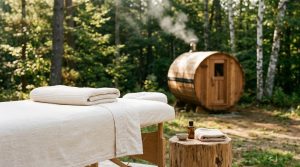
A sauna pairs naturally with running beyond the solo session. For a race, a mobile sauna at the finish gives runners a warm place to recover once they have rehydrated, and a run club can share one as a weekly recovery spot. For a hot goal race, renting a unit for a heat-acclimation block in the final weeks is a tidy way to get the sessions in without a gym membership. If any of that fits your plans, you can check available dates or look over the rental packages.
The short version
Yes, you can use a sauna after running, as long as you cool down, rehydrate, and keep it on the shorter side when you are depleted. Use it to relax tired legs, or run it as a heat-acclimation block before a hot race, where the research is more interesting. Just do not pile a long, hot session onto a body that is still pounding and dried out, and after a marathon, let fluids and rest come first.