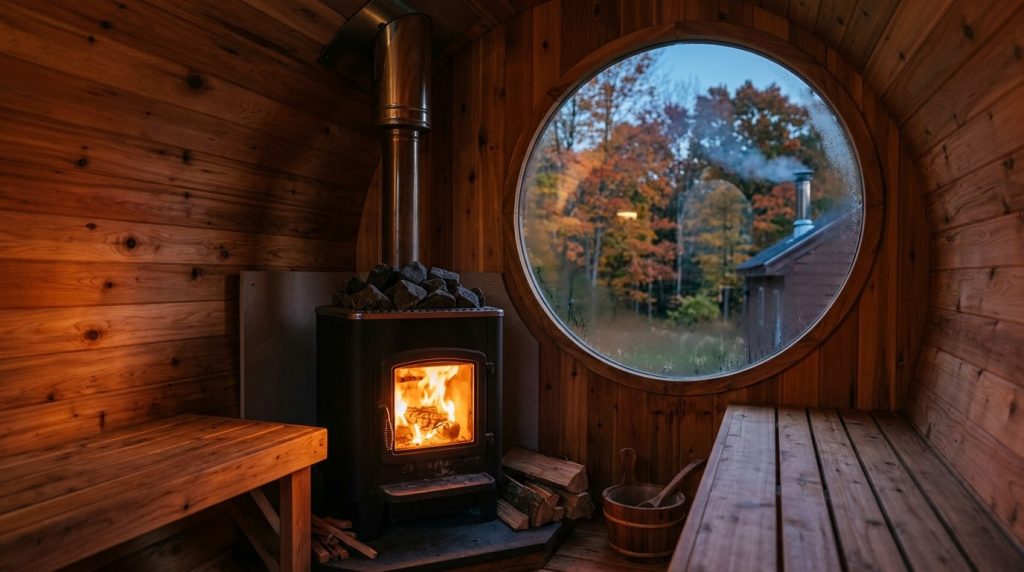
Most saunas take 15 to 45 minutes to heat up, but the honest answer depends on the type. An infrared sauna is usually ready in about 10 to 15 minutes, an electric traditional sauna in 25 to 40, and a wood-fired sauna in 45 minutes to an hour or more. A mobile wood-fired unit, which is what most rentals are, sits at the long end, and in a cold New England winter you should budget closer to 60 to 90 minutes. The number also moves with the weather, the size of the room, how well it is built, and the heater.
| Sauna type | Typical heat-up | Notes |
| Infrared | 10 to 15 minutes | Warms you, not the air; you can start before peak |
| Electric (traditional) | 25 to 40 minutes | Heats the air and rocks; longer when larger or outdoors |
| Wood-fired | 45 to 60+ minutes | You build and feed a fire; longest, and a soft radiant heat |
| Mobile wood-fired, outdoors | 60 to 90 minutes in the cold | Exposed to weather; a Connecticut winter adds time |
Why the same sauna can heat up at different speeds
Two saunas with the same heater can reach temperature at very different speeds, and it has little to do with patience. The type sets the baseline, but the conditions move it a lot. Outdoor temperature is the big one, because cold air and wind pull heat away faster. A unit that heats in about 35 minutes indoors can need another 10 to 20 minutes outdoors on a cold day, and more than that in deep winter. Room size and insulation matter next: a bigger or poorly sealed room has more air to heat and loses more of it as it goes. The heater has to be sized to the room, a cold start takes longer than a warm one, and in a wood or rock sauna the stones themselves have to come up to heat, not just the air. Stone mass plays a part as well, since more rocks hold more heat and give better steam but also add to the warm-up, a trade many owners do not expect. For what temperature you are actually waiting for, see our sauna temperature guide.
Heat-up time by sauna type
Infrared saunas are the fastest because they warm your body directly instead of heating the air first, so they are usable in about 10 to 15 minutes even while the cabin still feels cool. Many people start before it reaches its highest setting. The trade-offs between infrared and a traditional room are covered in infrared vs traditional sauna. Electric traditional saunas heat the air and a bank of rocks, which gives the classic high heat but takes longer, usually 25 to 40 minutes, and the last stretch from warm to hot is the slowest part.
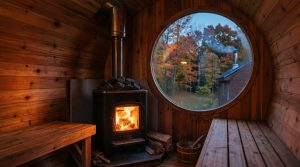
Wood-fired saunas take the longest, generally 45 minutes to over an hour, because you are building and feeding a fire rather than flipping a switch, and the heat depends on your fire, the wood, and the draft. A traditional stove also needs the fire to burn properly hot before the room is ready, which is part of why it takes longer and why rushing it leaves you short of a real heat. The payoff is a soft, radiant heat that holds well once it is there. For how wood and electric compare beyond heat-up time, see wood-fired vs electric sauna.
Mobile and wood-fired saunas take the longest
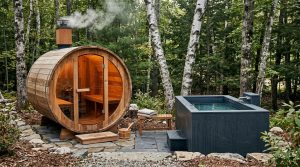
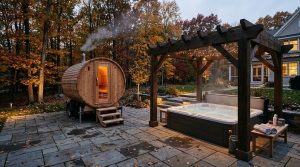
This is where the generic timelines stop being useful, because a mobile sauna is a different animal. Most rental and mobile units are wood-fired and sit outdoors, which puts them at the slow end on both counts at once. A wood-fired unit does not come up to temperature at the flick of a switch; you are lighting and building a fire, and it climbs gradually. Add an exposed spot with wind moving across the walls and a cold start in a New England winter, and a realistic window is 60 to 90 minutes rather than the 45 you might read for an indoor wood sauna.
There is also a quieter point about what ready means in a wood-fired unit. The air can feel hot well before the rocks are, and if you rush in you get a warm room with cool stones and weak, thin steam when you pour water. Letting the stones fully heat is what gives you the deep, soft loyly a wood sauna is known for, so the wait is part of getting it right rather than time wasted. If you are firing your own mobile unit, a good rule is to light it about an hour before you want to get in during the warmer months, and closer to ninety minutes in deep cold, then feed the fire once partway through so the heat keeps climbing.
With a rental, you skip the wait
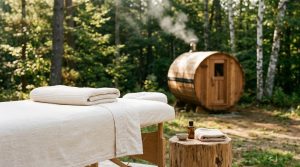
Here is the part that matters most if you are renting rather than owning. The long heat-up time of a mobile wood-fired unit is the operator’s job, not yours. The unit is fired up and brought to temperature before your booked window starts, so you arrive to a sauna that is already hot and your whole session is session time, not waiting time. It is one of the real advantages of renting over owning, where every session starts with you lighting a fire and watching a thermometer. For how a booking actually runs, see what to expect from a mobile sauna rental, and you can check available dates or look over the rental packages when you are ready.
How to heat up a sauna faster
If you are heating your own, a few things genuinely help. Match the heater to the room, since an undersized heater fighting too much space is the most common reason a sauna crawls to temperature. Keep the door shut during warm-up, because every time it opens the hot air leaves and the clock resets a little. Set the vents correctly rather than blocking them, as a heater needs airflow to burn and circulate heat. With a wood-fired unit, use dry, well-seasoned wood, since green or damp wood burns cooler and slower. And in cold weather, the simplest fix is to start earlier and let it build. Preheating as part of a routine helps most of all, since regular users just turn it on before dinner or a workout so the wait overlaps something else.
A few things do not help, despite being common advice. Do not pour water on cold rocks to speed things along, which does nothing for air temperature and can damage a heater. Do not seal the vents to trap heat, which gives you uneven warming and a safety problem. And do not crank a heater past its limits, which stresses the unit without getting you there faster.
Why is my sauna taking so long
If your sauna is slower than it should be, the cause is usually one of a short list. The heater is undersized for the room. The walls, ceiling, or floor are poorly insulated and leaking heat. The room is large or has a high ceiling, so there is more air to warm. It is cold or windy outside and the unit is exposed. The wood is wet or green in a wood-fired stove. Or the door keeps getting opened mid-warm-up. Work down that list and most slow saunas sort themselves out.
What heated up actually means
Part of the wait is really about expectations. Ready is a target temperature for the session you want, not the maximum the sauna can reach. A gentle, low-and-slow session is comfortable around 120 to 140F, which a sauna hits well before it is fully heated, while a hot traditional session at 160 to 190F asks for the full warm-up and then some. Pick the temperature your session needs and the wait gets shorter. A sauna can feel usable several minutes before the thermometer hits your number, so trust how the room feels as much as the gauge. Once it is hot, how long to actually stay in is its own question, covered in how long to stay in a sauna.
The short version
Infrared is ready in 10 to 15 minutes, electric in 25 to 40, and wood-fired in 45 to 60 or more, with a mobile wood-fired unit running 60 to 90 in cold weather. The time moves with the weather, the size and build of the room, and the heater. Right-size the heater, keep the door shut, use dry wood, and start earlier when it is cold. And if you rent, you skip the wait entirely, since the unit is hot before your session begins.