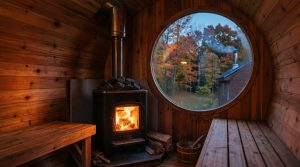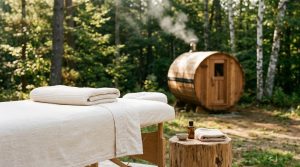
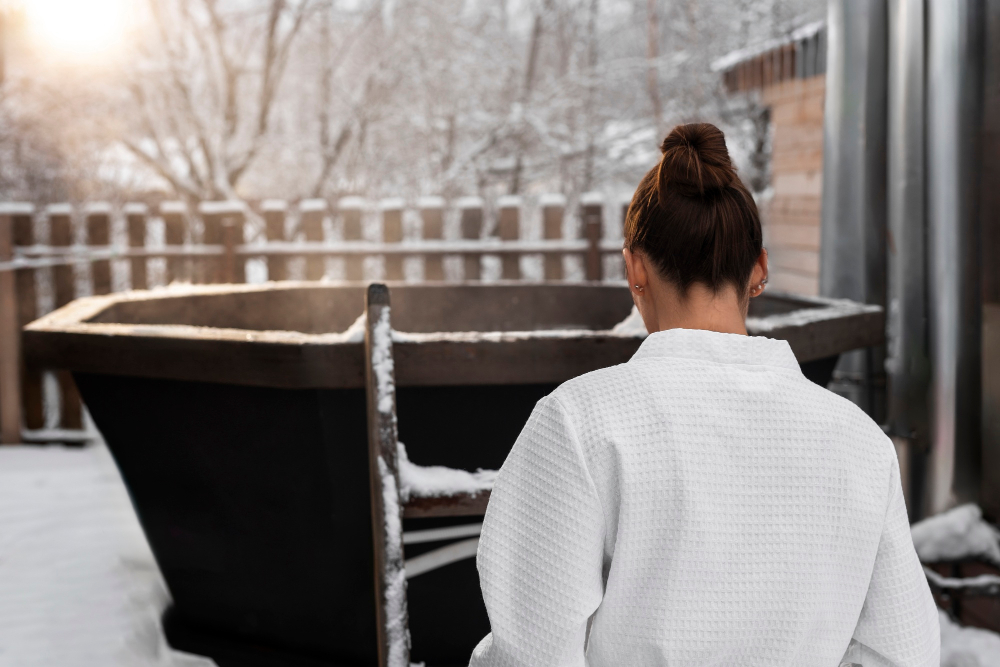
Most pages on this topic list seven or ten benefits and treat every one of them as proven. Some are well supported. Some rest on a handful of small studies. A couple are marketing. You deserve to know which is which before you sit in a 190 degree room and then climb into 50 degree water.
Worth saying up front: we rent wood-fired saunas with a cold plunge, so we have a reason to make this sound good. We have tried to grade the evidence honestly anyway, including the parts that argue for caution.
The short answer
Benefit | How strong the evidence is | What it rests on |
|---|---|---|
Heart and blood vessel health | Moderate to strong for sauna, weak for the pairing | Large long-term Finnish studies of regular sauna use |
Mood and alertness after the cold | Moderate, short term | Small studies of cold water immersion |
Less muscle soreness after hard effort | Moderate | Reviews of cold and hot-cold water immersion in athletes |
Relaxation and better sleep | Mostly self-reported | Surveys and small studies |
Fewer sick days | Limited | One large trial of hot-to-cold showers |
Fat loss | Weak | Short-term calorie burn, no proven weight loss |
Detox | None | Sweat is temperature control, not waste removal |
The honest summary: regular sauna use has the strongest evidence behind it, the cold adds a reliable short-term lift in mood and alertness, and the combination is a good recovery tool. Nearly everything beyond that is still being studied.
What the pairing adds that neither does alone
Heat opens your blood vessels and pulls blood toward the skin. Cold clamps them down and sends blood back to your core. Moving between the two makes your circulation do that work repeatedly, and most people come out feeling both relaxed and wide awake, which neither half produces on its own. How to structure the rounds, and why the alternation matters, is covered in our contrast therapy guide. This page sticks to what the pairing does for you.
The benefits, one at a time
Heart and blood vessels
This is the best-supported benefit, and it belongs almost entirely to the sauna half. The Kuopio study in eastern Finland followed more than 2,300 middle-aged men for about two decades. Men who used a sauna four to seven times a week had a lower risk of fatal heart disease and death from any cause than men who went once a week.
Two caveats matter. The study is observational, so it shows an association rather than proof that the sauna caused the difference. And it measured traditional Finnish sauna bathing, not cold plunging. Nobody has run the same kind of long-term study on the pairing yet.
The cold side works in the opposite direction in the short term. Entering cold water spikes your heart rate and blood pressure within seconds, which is why the effect of heat and cold on blood pressure is worth reading if yours runs high.
Mood and alertness
This is the benefit people notice first. The minutes after a cold plunge tend to feel clear, awake and oddly calm. There is a plausible reason. A frequently cited study found that sitting in water around 57 degrees F raised levels of noradrenaline and dopamine in the blood several-fold. The catch is that participants stayed in for an hour, which is far longer than anyone should plunge at home.
Shorter dips appear to produce a similar lift at a smaller scale, and the feeling usually fades within a few hours. It is real, it is short term, and it is a good reason to do this in the morning. For the heat side of the mood question, see what regular sauna use does for mental health.
Muscle soreness and recovery
Reviews of athletes who alternate hot and cold water after hard training find less perceived soreness and a faster sense of recovery than resting passively. The effect is moderate rather than dramatic, and much of it is about how you feel rather than measurable performance.
One exception matters if you lift. Cold water right after strength training may blunt some of the muscle growth you trained for, so the timing of a cold plunge around workouts deserves attention. Endurance athletes have less to worry about here. If recovery is your main goal, our page on sauna for athletes covers event-day use, and what heat does to inflammation explains the soreness side.
Relaxation and sleep
Many people sleep noticeably better on nights they use a sauna, and the likely mechanism is simple: your body cools down after the heat, and falling core temperature is one of the signals that tells you it is time to sleep. Most of the evidence is self-reported, so treat it as likely rather than proven. The cold is stimulating, so an evening session sleeps best when it ends with a proper warm-up and a quiet half hour. More on that in sauna and sleep.
Fewer sick days
A large Dutch trial asked people to finish their daily shower with 30 to 90 seconds of cold water. They reported about 29 percent fewer sick days from work than people who did not. They did not get sick less often, and their illnesses did not end sooner. They simply felt well enough to work more often. It is an interesting result from one trial, and nothing more yet.
What it does not do
It does not detox you. Your liver and kidneys clear waste from your blood. Sweat is water, salt and trace amounts of other things. There are good reasons to use a sauna, and detox is not one of them.
It is not a weight loss tool. The scale drops after a session because you lost water, and it comes back when you drink. Cold exposure does activate brown fat and burns some extra calories, but no study has shown meaningful weight loss from sauna and cold plunge alone. Our page on whether the sauna burns fat or water goes through the numbers.
Colder is not better. The reported mood effects show up in water around 50 to 60 degrees F. Going near freezing mostly shortens how long you can stay in and raises the risk.
The risks worth knowing
The cold half carries most of the risk. The first minute in cold water triggers the cold shock response: a sharp involuntary gasp, fast breathing, and a jump in heart rate and blood pressure. For a healthy person it passes in a minute or two. For someone with heart disease, it is a real cardiac stress.
Skip the cold, or talk to a doctor first, if you have heart disease, an arrhythmia, uncontrolled high blood pressure, Raynaud phenomenon, or you are pregnant. Never plunge after drinking, never put your head under on entry, and do not plunge alone the first few times. Our page on who should avoid heat and cold exposure covers the full list.
How much you need
The benefits above come from modest doses done regularly, not from pushing limits. Two to four sessions a week suits most people. A round in the heat usually runs ten to twenty minutes, and a cold dip of one to three minutes is plenty. The exact temperatures and times for the cold plunge are worth reading before your first try.
Questions people ask
Is it good to do sauna then cold plunge?
For most healthy adults, yes. Heat first and cold second is the traditional order and the one most of the research uses. If you have any of the conditions listed above, check with a doctor first.
Is daily sauna and cold plunge good for you?
Daily sauna use is normal in Finland and was linked to the best outcomes in the long-term studies. Daily cold plunging is fine for many people, but it is not required. Two to four cold sessions a week appears to deliver most of the reported benefit, and how often you should sauna depends more on consistency than on the number.
Do sauna and cold plunge burn fat?
A little, not enough to matter on its own. Cold exposure raises calorie burn for a short time, and the heat raises your heart rate, but the weight you lose in a session is almost all water.
Should you end on cold or on heat?
Ending on cold leaves you more alert and gives the longer-lasting lift. Ending on heat is more relaxing and easier on your body in winter. Pick based on what comes next in your day.
Try it before you buy anything
A sauna and a cold plunge together cost thousands of dollars to own, and the only way to know if you will keep doing it is to try it a few times. The Toasty Gnome delivers a wood-fired sauna with an optional cold plunge to backyards across the greater Plainville area in Connecticut, so you can test the pairing at home. See how renting works, or read what to expect from a delivered session first.