The reason heat helps you sleep is not that it relaxes you, though it does. It is that heating your body forces a sharper cooling afterward, and that cooling is one of the strongest signals your brain uses to start sleep.
Understanding that one mechanism tells you almost everything about how to time a session, and it also explains a common evening habit that quietly cancels the benefit.
Your Body Cools Down to Fall Asleep
Core body temperature runs on a daily cycle. It peaks in the late afternoon and starts falling through the evening, dropping by somewhere around half a degree to just under a full degree Celsius overnight. That fall is not a side effect of sleeping. It is part of what starts sleep.
Your brain reads the decline as a timing cue and shifts into sleep mode alongside it. Anything that sharpens that decline tends to make falling asleep faster and easier.
What Heat Does to That Signal
A sauna session raises your core temperature by roughly one to two degrees Celsius. When you come out, your body works hard to shed that heat. Blood vessels in your hands and feet open up, you continue to sweat, and your core temperature falls faster and further than it would have on its own.
You are not warming yourself toward sleep. You are creating a bigger drop for your body to fall through. The heat is the setup and the cooling is the effect.
Warm Hands, Cool Core
There is a detail here that is genuinely useful and rarely mentioned.
Researchers measure the difference between skin temperature at your extremities and skin temperature at your torso. When your hands and feet are warm relative to your middle, it means your body is actively dumping heat out of the core. A well known 1999 study found this gradient predicted how quickly people fell asleep better than melatonin timing, heart rate, or how sleepy people said they felt.
The practical version: if your hands and feet feel warm and your body feels like it is settling, the mechanism is working. If you are still flushed and radiating heat, it has not finished yet.
What the Evidence Actually Covers
This is where most articles on the subject quietly overstate things, so it is worth being straight about it.
The strongest research in this area studied warm bathing rather than saunas. A widely cited review found that passive body heating in the one to two hours before bed shortened the time people took to fall asleep and improved sleep efficiency. Work on older adults with insomnia found that raising core temperature by about one degree in that same window shortened sleep onset and increased slow wave sleep.
That is solid, and the mechanism carries across to a sauna cleanly, because a bath and a sauna are doing the same physiological job. But controlled trials on saunas specifically are still limited, and you should treat the confident hormone claims accordingly. You will read that sauna use raises melatonin and lowers cortisol as though it were settled. At least one sauna company is honest enough to admit the direct evidence for a consistent melatonin response is thin.
There is also a large self reported survey in which a strong majority of sauna users said their sleep improved. That is worth something, but people reporting better sleep is a different kind of evidence from measured sleep, and it is worth holding it a little more loosely than the pages quoting it do.
The Timing That Works
| When | Effect |
| 90 minutes to 2 hours before bed | The target window. Temperature rises, then falls into your natural evening decline. |
| Around 60 minutes before bed | Usually workable, though some people are still too warm. |
| Under 30 minutes before bed | Counterproductive. You get into bed still hot, which blocks the drop you need. |
| Early afternoon | Fine for other reasons, but too far from bedtime to help sleep onset. |
The mistake people make is treating the sauna as the last thing before bed. It works better as the thing you do before the last hour, leaving time to cool, shower, and wind down while your temperature comes back down.
Session Length and Heat
- Fifteen to twenty minutes is enough for the temperature effect. Longer is not better here.
- Very high heat is not required and can leave you feeling stimulated rather than settled.
- Three to five evenings a week produces more consistent results than occasional long sessions.
- Keep the session calm. This is not the evening for a hard contrast round.
The Cold Plunge Problem
This is the mistake worth flagging, because two popular practices give opposite advice and almost nobody points it out.
In cold exposure circles the common instruction is to finish on cold. For daytime use, that is a defensible position. In the evening it works against you.
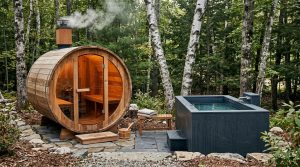
Cold immersion makes your body clamp down and generate heat to defend its core temperature. That is the opposite of the cooling drift you are trying to create before bed. Finish a late sauna with a cold plunge and you may find yourself alert and warming back up exactly when you wanted to be sliding downward.
If you want both, put the cold sessions earlier in the day and keep the evening sauna simple. A brief cool shower to stop the sweating is fine. A full cold plunge at ten at night is working against your own bedtime.
Hydration Cuts Both Ways
You lose a meaningful amount of fluid in a sauna, and going to bed short on water is its own way to sleep badly. Dehydration can wake you overnight and leave you feeling rough in the morning, which people then blame on the heat.
Drink before the session and afterward. Do not overcorrect by drinking a liter right before bed either, for reasons that need no explanation.
When This Will Not Fix It
Heat before bed helps with falling asleep and with sleep depth. It is not a treatment for every sleep problem, and it is worth being clear about that.
- Chronic insomnia lasting months deserves proper assessment rather than a routine adjustment.
- Loud snoring, gasping, or daytime exhaustion despite adequate hours can indicate sleep apnea, which heat will not touch.
- Shift work and jet lag are circadian timing problems and need light management more than temperature.
- If a medical condition or medication affects how you handle heat, check before adding an evening sauna routine.
A Simple Evening Routine
- Finish your session around 90 minutes to 2 hours before you intend to sleep.
- Fifteen to twenty minutes at a moderate heat. Comfortable rather than punishing.
- Rinse cool enough to stop sweating, but skip the cold plunge.
- Drink water afterward, without overdoing it.
- Keep the lights low and the bedroom cool while your temperature comes down.
- Give it three or four weeks before judging it. The effect compounds with consistency.
The Short Version
Heat works because of the cooling that follows it. Sit in the sauna 90 minutes to 2 hours before bed, keep the session moderate, let yourself cool down properly, and leave the cold water for the morning.