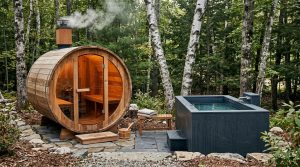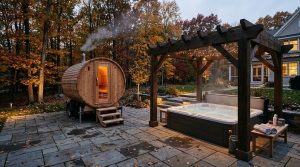
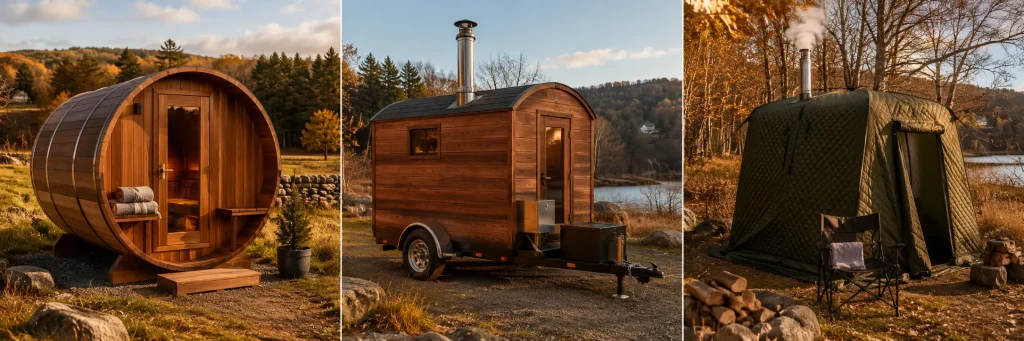
These three get compared as though they were three versions of the same purchase. They are not. They are three answers to different questions, and the right one depends less on heat performance than on where the sauna will live and how often it needs to move.
Before anything else, one piece of housekeeping that causes more confusion than everything else combined.
Sauna Tent Means Two Different Things
Search that phrase and you will get two products that have almost nothing in common.
The first is a personal steam box. Plastic or fabric, folds into a closet, holds one person sitting on a small chair with their head poking out of the top, and runs off a little electric steam generator. These sell for somewhere between eighty and a hundred and fifty dollars. They produce steam and they make you sweat. They are not a sauna in any traditional sense and there is no room for anyone else.
The second is a proper tent sauna. Canvas or technical shell, a real wood burning stove with a flue through the roof, stones you can pour water over, and bench space for several people. A good one reaches genuine sauna temperature, somewhere in the region of 150 to 190 degrees F.
Marketplaces file both under the same search term. When you read a comparison of tent saunas against barrel saunas, it is worth checking which of the two the writer has in mind, because the answer changes everything that follows.
Everything below refers to the second kind.
The Three Formats Side by Side
| Barrel | Trailer | Tent | |
| Typical weight | Under 1,000 lbs | 2,000 to 4,000 lbs | Packable by hand |
| Moves easily | No, needs loading | Yes, if you can tow it | Yes |
| Foundation | Level ground only | None, sits on the trailer | None |
| Setup | Kit assembly, then stays put | Arrives ready | Pitch each time |
| Capacity | Four to six typical | Four to six typical | Varies, often smaller |
| Cost band | Roughly $3,500 to $5,000 | Higher, plus a tow vehicle | Lowest by a wide margin |
| Durability | Years outdoors | Years, built for road use | Shorter, fabric wears |
| Best suited to | A permanent backyard spot | Moving between locations | Trips and temporary setups |
The Barrel
The cylinder is not just an aesthetic choice, and this is the part the manufacturers explain well.
In a rectangular room, hot air rises and sits at the ceiling, leaving the lower half cooler. That is why you feel a sharp temperature difference between the top and bottom bench of a square sauna. A barrel curved ceiling sends that rising air back down along the walls, so it keeps circulating instead of settling into layers. The result is more even heat and a faster warm up.
You will see a figure repeated across sauna sites that a barrel heats around 23 percent faster per cubic foot than a comparable cabin. Worth knowing that this originates as a manufacturer claim rather than independent testing, and that insulation changes the picture considerably. A well insulated cabin can hold heat better than an uninsulated barrel regardless of shape.
The practical case for a barrel is strong and simple. It needs no foundation, only level ground. It arrives as a kit and goes together in a day or so. It costs somewhere in the region of three and a half to five thousand dollars for a four to six person unit. And it will sit in your yard for years.
The thing to be clear eyed about is portability. Under a thousand pounds sounds movable, and technically it is, but moving it means hiring or borrowing a utility trailer and getting several people together. This is a semi permanent structure. Site it where you want it to stay.
The Trailer
A trailer sauna is a full sauna built onto a towable frame. Same heat, same stove, same benches, except the whole thing has a hitch.
This is not a modern gimmick. Finns have been putting saunas on sleds and trailers for generations, and mobile saunas were standard issue in the Finnish army during the Second World War.
The advantages are real. No foundation and no permits for a temporary setup. It goes to a lake, a cabin, a friend property, or a different address if you move house. Heat up takes roughly sixty to ninety minutes from cold.
Now the part that decides this for most people, and that almost nobody mentions in a buying guide.
A trailer sauna weighs somewhere between two thousand and four thousand pounds. A lot of family vehicles cap out below two thousand pounds of towing capacity. Which means owning one is not really a sauna decision, it is a truck decision. Builders who have gone through this describe shrinking their plans repeatedly to stay under a tow limit, and giving up the changing room to do it.
If you already own a capable truck, a trailer sauna is a genuinely good answer. If you do not, factor in the vehicle before the sauna.
The Tent
A proper tent sauna is the only one of the three you can carry.
It packs down, travels in a car, and pitches wherever you are going. It costs a fraction of what the other two do. And with a decent stove it reaches temperatures that compete with, and sometimes exceed, a hard shell unit, partly because there is less air volume to heat.
The trade offs are the ones you would expect from fabric. Heat retention is weaker in wind and cold, which matters in a Connecticut February. It has to be pitched and struck each time, which is fine for a weekend trip and tiresome as a weekly routine. And a fabric shell simply will not last as long outdoors as cedar staves or a trailer body.
For camping, lake trips, and taking heat somewhere remote, it is the obvious choice. As a permanent backyard fixture, it is the weakest of the three.
Which One Is Right
| Your situation | Format |
| A permanent spot in the yard, used year round | Barrel |
| Moving it between properties, and you own a truck | Trailer |
| Backpacking, camping, remote trips | Tent |
| Renting your home and likely to move | Trailer or tent |
| Lowest possible cost to get started | Tent |
| Best heat for the money in one fixed place | Barrel |
| Occasional use, a few times a year | None of them, see below |
For most people wanting a sauna at home permanently, the barrel is the right answer and it is not especially close. It costs less than a trailer setup, outlasts a tent, heats well, and needs nothing more than flat ground.
The Fourth Option Nobody Lists
Every comparison of these three assumes you are buying one. That assumption is worth examining, because the honest question underneath is how often you will actually use it.
If the answer is several times a week, buy. A barrel pays for itself against studio sessions inside a couple of years and it will still be there afterward.
If the answer is a handful of weekends a year, a group gathering, an occasional winter evening with friends, then several thousand dollars of cedar sitting in the yard for eleven months is a poor trade. Renting a trailer unit for the weekends you actually want it costs a fraction of the total and requires no assembly, no siting decision, and no truck.
It is also the sensible way to find out which format you actually like before committing. Sitting in a wood fired sauna once tells you more than any comparison table will, including this one.