Cold water has gone from a fringe habit to a category with storefronts, and Connecticut now has real options. It also has a geography problem that nobody mentions until you start looking.
Here is what exists, organized by format rather than by town, along with the distinction that most listings get wrong.
First, Cryotherapy Is Not a Cold Plunge
This trips people up constantly, partly because directory sites file both under the same heading.
Whole body cryotherapy puts you in a chamber of very cold air for two or three minutes. Cold water immersion puts you in water somewhere in the region of 40 to 55 degrees F for a similar length of time. Water conducts heat away from your body far more efficiently than air does, so the two are not interchangeable, and most of the research people cite for cold exposure was done on immersion rather than air.
Both have their advocates. But if you read something about cold plunging and went looking for it, a cryo chamber is not the same purchase.
Dedicated Contrast Therapy Studios
These are purpose built rooms pairing a sauna with a cold plunge, usually booked as a private suite.
Pause Studio in Cos Cob runs private contrast suites with infrared heat and a plunge, in 30 and 60 minute blocks, and publishes a straightforward cycle of roughly nine minutes hot, three minutes cold, a minute of rest, repeated for the session.
SweatHouz in Westport works similarly, with hour long private suites that include an infrared sauna, a cold plunge and a vitamin C shower. Suites hold up to four people, which makes it one of the few formats that works for a small group.
Both are good. Both are also in Fairfield County, which brings us to the awkward part.
The Fairfield County Problem
If you live in Hartford, Bristol, New Britain or anywhere in Central Connecticut, you will notice quickly that the dedicated contrast studios cluster in the southwest corner of the state.
That is not an accident. The category followed the money into lower Fairfield County and has not spread evenly since. For a lot of the state, the nearest purpose built plunge suite is a drive of an hour or more each way, which is a difficult thing to build a twice weekly habit around.
It is worth knowing before you plan a routine rather than after.
Recovery and Wellness Centers
The broader recovery centers are more evenly distributed, though what they offer varies.
Restore Hyper Wellness has a location at Bishop Corner in West Hartford, running cryotherapy, infrared sauna, compression and red light therapy. Imagine Float, on West Main Street in Avon just off Route 44, offers float tanks, cryotherapy, infrared sauna and red light.
Both are solid recovery options and both are convenient to Central Connecticut. Note the modality though, since these lean toward cryotherapy and float rather than water immersion. If cold water specifically is what you want, check before you book.
Immerse HydroSpa runs a hydrotherapy circuit with a hot sauna and a cold waterfall bucket, which is a different experience again and closer in spirit to a Nordic bathing sequence than a plunge tub.
Mobile Sauna and Cold Plunge
The newer option is having it brought to you.
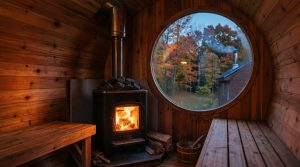
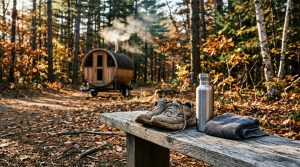
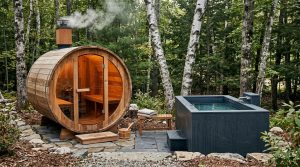
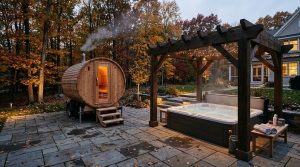
Several operators now run mobile setups that arrive at a house, an event or a retreat, set up, and leave afterward. Sauna CT covers a good part of the state. We run wood fired mobile saunas out of Plainville with a cold plunge available, across Central Connecticut.
The case for this format is not really convenience. It is that a private setup works for a group in a way a single suite does not, and that for anyone in the middle of the state it removes the drive that makes a studio membership hard to sustain.
Natural Cold Water
Connecticut has lakes across the Litchfield hills, rivers throughout, and Long Island Sound along the whole southern edge. All of it is free and in winter all of it is genuinely cold.
It also deserves more caution than any studio session. Entering cold water triggers an involuntary gasp and a sharp spike in heart rate and blood pressure, and in open water that reflex is a leading cause of drowning. A controlled tub with a step and a handrail is a very different proposition from a lake in February.
If you want to do this in natural water, do it with other people rather than alone, walk in rather than jumping, know the depth and the exit before you enter, keep it brief, and never after drinking. Organized cold water swimming groups exist for exactly this reason and are a far better entry point than going out on your own.
At Home
The least glamorous option and the one most likely to become a habit.
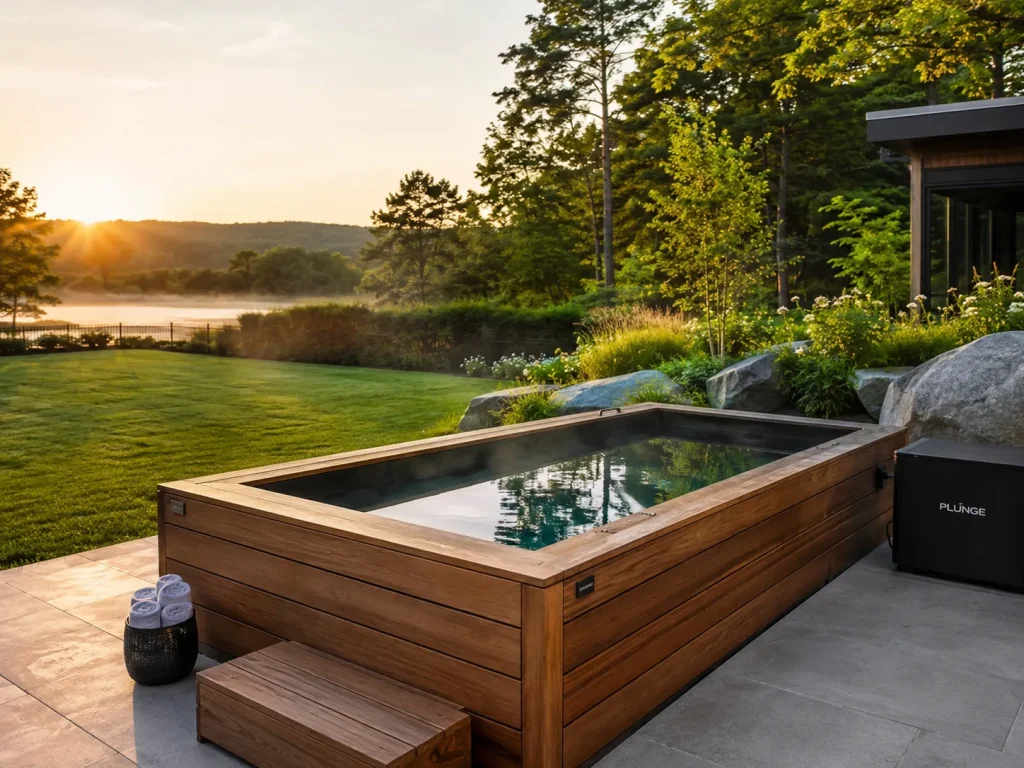
A bathtub with bagged ice works. A livestock stock tank costs very little and lives outside quite happily. In a Connecticut winter, an outdoor tub of water will often get most of the way to plunge temperature on its own between December and March, which is the closest thing to a free lunch in this whole category.
The equipment matters much less than doing it regularly.
Choosing Between Them
| If you want | Look at |
| A guided first experience | A contrast therapy studio with staff on hand |
| A regular twice weekly habit | Whatever is closest to home, honestly |
| Something for a group | A private suite that fits four, or a mobile setup |
| Cold air rather than water | A cryotherapy center |
| Free and outdoors | Natural water, with a group and proper precautions |
| Cheap and consistent | A stock tank in the yard |
Before You Start
Cold water immersion raises heart rate and blood pressure sharply on entry. If you have a heart condition, uncontrolled blood pressure, asthma, or you are pregnant, speak to a doctor before starting rather than afterward. This is one of the areas where the standard caution is not a formality.
And whichever format you pick, the numbers are less dramatic than the marketing suggests. A few minutes in genuinely cold water, a few times a week, is the whole practice.