Physiologically, these are the same thing. Cold water on skin at a given temperature produces the same response, and it makes no difference if the water got cold from bagged ice or from a chiller unit.
Your body does not know what equipment you bought. What differs is control, and control turns out to matter more than the marketing suggests, though not for the reasons the marketing gives.
What actually differs
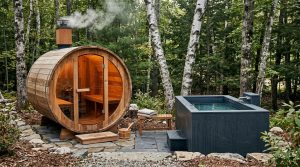
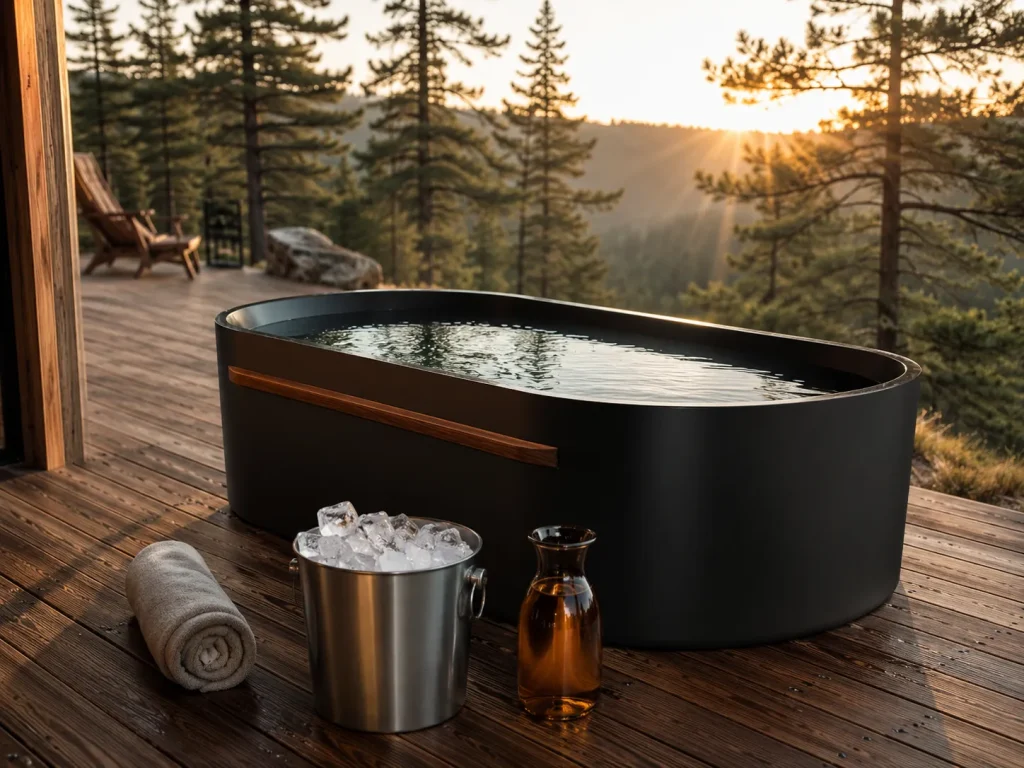
An ice bath is a container of water with ice added. A stock tank, a bathtub, a chest freezer conversion, or anything that holds water and a person. Temperature is whatever the ice and water settle at, which depends on how much ice you used and how warm the water started.
A cold plunge, as the term is generally used now, is a purpose-built tub with a chiller unit. It holds a set temperature, usually has filtration, and costs somewhere between a few hundred and several thousand dollars depending on the model.
Those are equipment differences. The water is water.
The difference that actually matters
Here is the part almost nobody covers, and it is the reason the distinction is not purely commercial.
An ice bath does not hold its temperature. It starts at its coldest the moment the ice has melted enough to chill the water, and then it warms steadily for as long as you are in it, because you are a heat source sitting in an unheated container.
A chilled plunge holds. Three minutes at 10 degrees is three minutes at 10 degrees.
So the same stated duration is not the same exposure. Ten minutes in an ice bath is a declining dose. Ten minutes in a temperature-controlled tub is a flat one. If you are trying to repeat a session, or follow a protocol you read somewhere, the ice bath version is approximate in a way the chiller version is not.
That does not make ice baths worse. It makes them harder to measure, which matters if you care about consistency and does not matter at all if you are just getting in cold water a few times a week.
Why the number feels wrong
Both formats produce a shock that seems out of proportion to the temperature reading, and there is a physical reason for it.
Water conducts heat away from your body far faster than air does, by a factor of roughly twenty-five. Ten degrees Celsius in a room is a cool day. Ten degrees Celsius in water is genuinely difficult.
This is why people who assume a cold plunge at 12 degrees will be manageable are frequently surprised. It also explains why the safe durations for cold water are so much shorter than anything you would apply to air temperature, and it is worth reading the guidance before your first attempt rather than after.
What the research actually studied
Almost all of the cold water immersion research used the simple version.
Studies on recovery, soreness and cardiovascular response overwhelmingly used a tub, cold water, and a thermometer, because that is what a university lab has. The branded chiller units are recent, and there is no body of evidence showing they produce a different outcome.
That is worth knowing when a product page cites research. The research supports cold water immersion. It does not support any particular tub.
The practical implication is straightforward. If the physiological response is what you want, a stock tank and bags of ice delivers it. If consistency, convenience, hygiene or not buying ice every day is what you want, the chiller is buying you those things rather than a better result.
The temperature question, since it comes up
People want to know how cold is cold enough, and the answer disappoints anyone hoping for a number that sounds impressive.
The bragging-rights version of this practice, with people posting single-digit temperatures, is not supported by anything. It is harder, which is not the same as better. Going colder does not appear to produce more benefit, and it shortens how long you can stay in, which may reduce total exposure rather than increasing it.
An ordinary cold tap in winter often lands in the useful range on its own, which is another argument for testing the cheap version before spending anything.
Hygiene, which nobody mentions
This is the genuine argument for the equipment and it rarely appears in the comparisons.
A tub of standing water that multiple people sit in, without filtration or sanitation, becomes a microbiological problem quickly. Skin bacteria, sweat, and whatever came off the last person all stay in there. Cold water slows bacterial growth but does not stop it.
If you are using an ice bath, empty and clean it regularly, do not share it without changing the water, and do not get in with an open wound. A purpose-built plunge with a filter and a sanitation system handles this, and that is a real reason to spend the money, unlike most of the reasons given.
Do they work
Both reduce delayed onset muscle soreness compared with doing nothing. Both produce the alertness and mood effects people describe. Both are studied as cold water immersion and neither has an advantage over the other.
There is one significant caveat, and it applies equally to both. If your training goal is building muscle or strength, cold water immersion straight after resistance training appears to reduce the adaptation. There is more on how the inflammation question works, and it is the single most useful thing an athlete can know about this practice.
The practical answer is to separate the cold from the training session, or to skip it on lifting days and keep it for rest days and competition weeks.
Cold showers are a third thing
People often ask if a cold shower does the same job, and the honest answer is that it does something, and less of it.
A shower does not immerse you. Water contacts a fraction of your skin, it drains away rather than surrounding you, and the temperature is whatever your cold tap gives, which in summer may be barely cold at all.
The cold shock response is real in a shower and the total exposure is much smaller. As a habit it is free, low-risk and available every day, which counts for something. As a substitute for immersion it is not equivalent.
What to pick
If you are still working out if you like cold exposure, do not buy anything. A bathtub and bags of ice will tell you within a week if this is a practice you will keep.
If you have decided you are doing this regularly and you are tired of buying ice, the chiller is buying convenience, temperature consistency and hygiene. Those are worth money to some people and not to others.
If you are pairing it with heat, the cold half is only part of the setup. The full hot-and-cold practice is where most of the interest sits, there is more on what the combination actually does, and a private setup removes the logistics of running the two separately.
Before any of this
Cold water immersion carries real risk for some people and it is not a formality. The gasp on entry is involuntary and it is a drowning risk if your head goes under, blood pressure spikes sharply, and heart rate surges.
For anyone with cardiovascular disease, uncontrolled hypertension, or an arrhythmia, this needs a conversation with a cardiologist first, and the blood pressure picture is worth understanding.
Do not do it alone until you know how you respond. Do not do it after alcohol. Get out early rather than proving something. And the heat side has its own list if you are doing both.
The bottom line
An ice bath and a cold plunge are the same exposure delivered by different equipment. The water does not know which tub it is in.
The one meaningful physiological difference is temperature stability: an ice bath warms while you sit in it, so the same clock time is a smaller dose.
Everything else the equipment buys is convenience, consistency and hygiene. Those are real and they are not the same as a better result.
The research supports cold water immersion generally, which means the cheap version has the evidence behind it too. Start there, and spend money only once you know you will keep doing it.