Almost every guide to this compares the four options on what they cost to build. That is the less interesting number. What separates them is what they cost to keep cold, and that is where people get caught out.
The four routes
Option | Strength | The catch |
|---|---|---|
Stock tank | Cheapest real option | No chilling. Ice cost adds up fast |
Chest freezer conversion | Cheap and very cold | Electrical risk. Needs GFCI and sealing |
Tub plus chiller | Most reliable, most expensive | Chiller is the cost, not the tub |
Bath with ice | Free to try | Fine for finding out if you like it |
A stock tank is the classic starting point: a galvanized livestock trough, a few hundred dollars, sat on a gravel base. It is genuinely the cheapest way to have a plunge in your garden and it has no way of making itself cold. In a Connecticut winter that is fine and the weather does the work. From May onwards you are buying ice, and the running cost of bagged ice several times a week is the number that ends most stock tank setups by their second summer.
A chest freezer conversion is the popular answer to that, because a freezer is a chiller you already know how to buy. It reaches temperatures far below anything you need and it costs little to run. It also puts a person into a body of water inside a mains-powered appliance, which is dealt with below and is not optional reading.
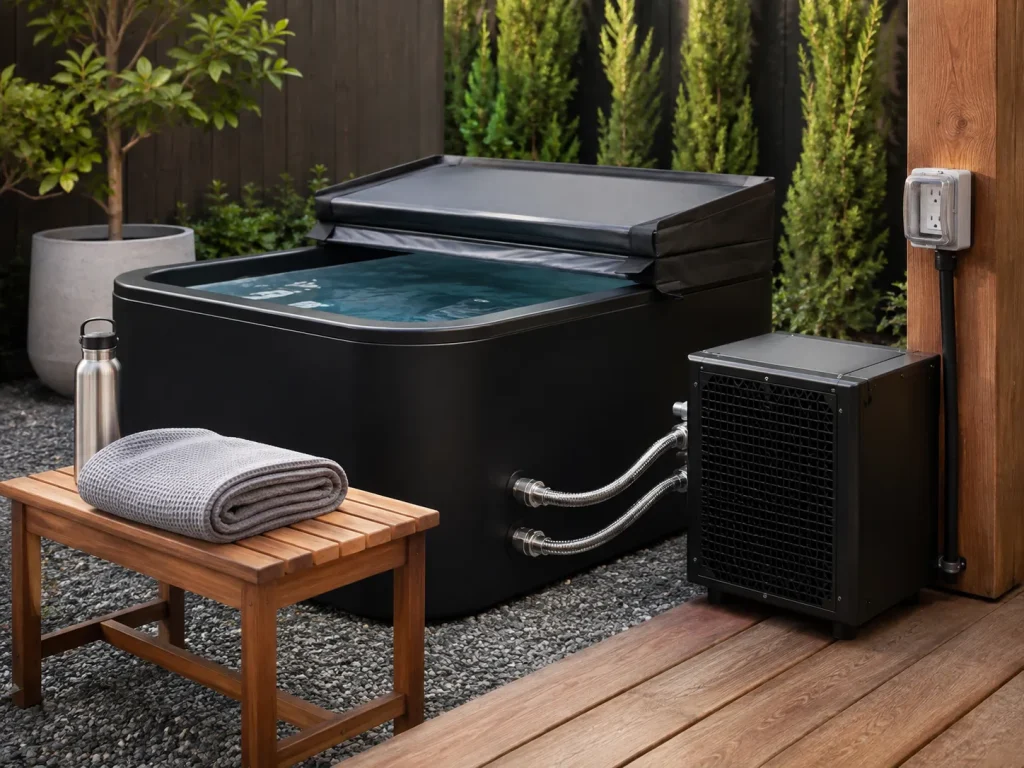
A tub with a dedicated water chiller is what the commercial units are, unbundled. The tub can be almost anything. The chiller is the expense and the thing to size properly, because an undersized chiller runs constantly, never reaches target and wears out.
And a bathtub with bagged ice costs nothing and is the correct first step for anybody who has not yet established that they will keep doing this. On which, the difference between an ice bath and a cold plunge is mostly about consistency rather than effect.
Electrical safety, which is not optional
Any setup that involves a chest freezer, a chiller, a pump or a heater near the water must be on a GFCI protected circuit. Not a regular outdoor outlet. A ground fault circuit interrupter cuts power in milliseconds when current starts finding a path it should not.
The chest freezer conversion deserves particular care because the appliance was designed to hold frozen food, not a person and a hundred gallons of water. The interior liner is not built to be watertight under that load, seams can open, and any leak reaches the compressor and the wiring underneath. If you are doing this, line it properly, keep every electrical connection above the waterline, and put the whole thing on GFCI. A cheap outlet tester and one hour of electrician time are the least expensive parts of the entire project.
Site it where water can drain away rather than pool around the base, and never run it from an extension cord.
The cold shock response
The second hazard is your own body and it is worth understanding rather than being warned about.
Sudden immersion in cold water triggers an involuntary gasp followed by rapid uncontrolled breathing. It is a reflex, it is not something you can decide not to have, and it lasts a minute or two. In open water it is the mechanism behind most cold water drownings, because the gasp happens underwater.
In a garden plunge the practical consequences are simple. Get in slowly rather than jumping. Keep your head above the water, always. Do not do it alone the first several times, particularly in a deep tub with high sides that would be hard to climb out of if your grip strength went. And control your breathing on entry, because slowing the breath is what shortens the response.
Cold water immersion also raises blood pressure sharply, so the guidance on who should avoid this kind of exposure applies with more force to cold than to heat. If you have any cardiac history, this is a conversation with a doctor rather than a decision to make from a build guide.
You are probably building it too cold
Here is the thing nobody selling chillers will tell you. Most people specify their setup around getting as cold as possible, and the evidence does not reward that.
The useful range is warmer and the durations shorter than the internet suggests, and going colder mostly buys you a shorter tolerable session rather than a better one. Our guide to plunge temperature and duration has the numbers. If you build around a realistic target instead of a heroic one, a smaller chiller will do, which is a direct saving on the most expensive component.
It also matters what you are doing it for. Cold immediately after strength training is not neutral, and the timing question around workouts has a clearer answer than most people expect. If recovery is the goal, what the cold actually does to your body is worth reading before you spend on equipment to chase it.
Water, and keeping it usable
Cold water is not clean water. A tub that sits outside collects leaves, dust, skin and sunscreen, and cold slows growth rather than stopping it.
You have three options and most people end up combining two. Change the water regularly, which is simple and wasteful. Filter and sanitize it, usually a small pump with a cartridge filter plus ozone or a low dose of chlorine. Or keep it covered, which is the cheapest single improvement, since a lid keeps debris out, keeps sunlight off and holds the cold in, cutting your chilling cost at the same time.
Rinse before you get in. Most of what fouls plunge water arrives on the people using it.
Women asking about this specifically will find that the picture on cold exposure is not identical across the board, and it is worth reading before settling on a protocol.
Pairing it with heat
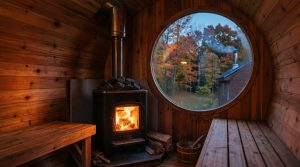
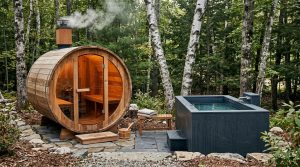
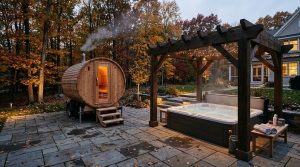
Most people building a plunge are building half of something. The alternation between hot and cold is the practice, and what the contrast actually does is a better guide to designing your setup than any single component. In practical terms it means siting the plunge close to wherever the heat is, because a long cold walk between the two is the friction that ends the habit.
If you want to test the pairing before committing to a build, a rental with the plunge included answers in one evening what a summer of ice purchases would tell you slowly, and there are also places in Connecticut set up for it already. Testing first also tells you how often you would realistically use it, which is the number that decides if a chiller is worth buying.