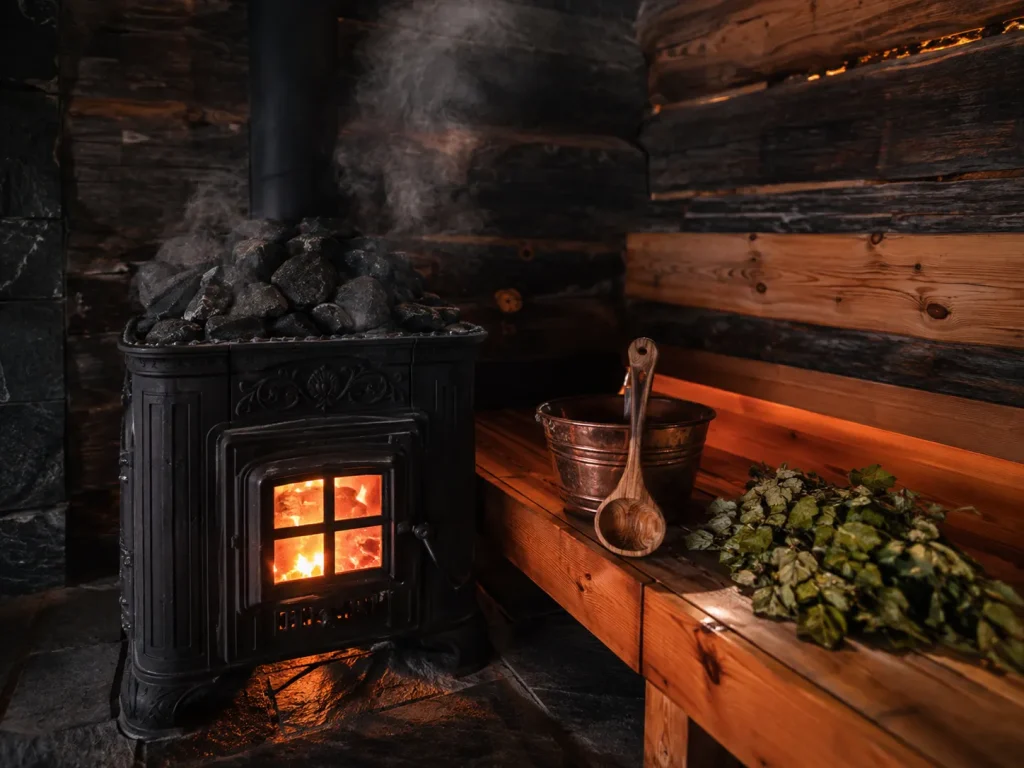
One of the most common questions Google shows on this search is what the difference is between a traditional sauna and a Finnish sauna. The honest answer is that there is not one. They are two names for the same thing, and the reason the question exists at all says something useful about how the practice arrived here.
In Finland nobody says traditional sauna. They say sauna. The qualifier only became necessary in markets where other products started borrowing the word, and a shopper needed some way to indicate they meant the kind with stones and a stove rather than a cabinet with heating panels in it.
Sauna is, incidentally, the only Finnish word in everyday English use. It is worth noticing how completely the thing came with its name attached.
What actually makes a sauna Finnish
Three elements, and the order matters.
The air is hot and dry, generally somewhere between 175 and 195 degrees Fahrenheit at the upper bench. There is a mass of stones sitting on or above the heat source, called the kiuas. And there is water, thrown onto those stones in small ladlefuls during the session.
The stones are the definition. A room without them can be hot, but it cannot do the thing a sauna does, because it cannot produce loyly. If you want the temperature side of this in figures across the different formats, our guide to sauna temperatures by type sets them side by side.
Loyly is the part that does not translate
Loyly is usually rendered in English as steam, which is not right and loses the point. It is the wave of heat that rolls off the stones and across the room when water hits them. You feel it arrive. The air goes from dry to briefly soft, the heat presses in, and then it recedes. Calling it steam invites a comparison with a steam room, and the two are not doing the same thing at all: a steam room holds saturated air continuously, while loyly is a pulse inside a room that is otherwise dry.
This is the single largest gap between how Finns and Americans talk about saunas. American guides compare units on temperature. Finns judge a sauna on the quality of its loyly, which is a separate matter entirely. Loyly quality depends on how much stone mass the stove holds and how well that mass retains heat. A stove with a small stone load will spike and then go flat. A heavy stone load gives a soft, sustained wave and recovers between ladles.
This is why a stove is worth more attention than the cabinet around it, and why the difference between wood-fired and electric heat is about more than convenience. It is also the clearest reason a sauna and an infrared cabinet are not variants of one product, which the direct comparison of the two goes into properly. An infrared unit has no stones and therefore no loyly, and no amount of marketing bridges that.
The three kinds of Finnish sauna
Type | How it heats | During the session | Where you find it |
|---|---|---|---|
Savusauna (smoke) | Fire burns for hours, no chimney | Smoke vented before bathing | The oldest form, still prized |
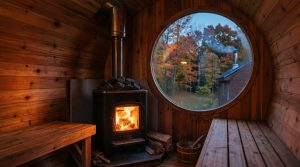
Wood stove | Wood burning stove with a flue | Fire burns during the session | The standard at summer cottages |
Electric | Element under the stones | Heats on a switch | Most city apartments and flats |
The savusauna, or smoke sauna, is the oldest and still the one Finns speak about with the most reverence. There is no chimney. A large fire burns in a stone stove for several hours until the stones are saturated with heat, the smoke is then vented out and the soot-blackened room is left to settle. The bathing happens afterwards on stored heat. It smells of woodsmoke and the heat is famously soft.
The wood stove sauna is what most cottages have. A fire burns in an enclosed stove throughout the session with a flue carrying the smoke out.
The electric sauna is the modern city answer, with an element under the stones. It is a convenience compromise and Finns generally say so, though it is what the great majority now use during the week.
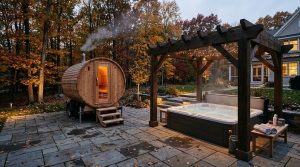
Mobile and portable versions have a longer history than most people expect, and the background to sauna on wheels and sleds runs back a good deal further than the current trend.
The cold part is not optional
Here is where the practice most often gets misunderstood outside Finland. The cooling stage is not a bonus round or a challenge. It is half of the thing.
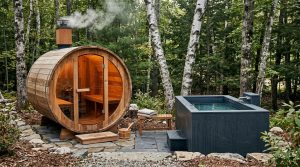
A Finnish session moves in cycles. Heat until you have had enough, go outside, cool down properly in a lake or the snow or under a cold shower, sit for a while and let your body settle, then go back in. Two or three rounds is normal and the sitting-outside part is not filler. It is where most of the pleasant, floating, emptied-out feeling actually happens.
The American framing has tended to package the cold as a separate discipline with its own equipment and its own claims. In Finland it has always simply been the second half of the sauna. Our page on what the heat and cold combination does covers the physiology, and the practical question of how long each round should last has a shorter answer than most first-timers expect.
It is a quiet room
A Finnish saying holds that you should behave in the sauna as you would in church. That is not about solemnity, it is about the register. The sauna is a place where voices drop, status is left at the door, and nobody is performing.
Business gets discussed in saunas, and so does government. Finnish embassies abroad have them. The reasoning is that it is difficult to posture with no clothes on and a great deal of heat, which turns out to be a reasonable basis for a conversation.
What this means in practice is that the loudest, most competitive version of sauna use, where people compare how long they lasted, is the furthest thing from the tradition. Nobody is scoring it. If you want the practical etiquette rather than the philosophy, our notes on how to behave in a shared sauna cover the ordinary courtesies.
Finnish sauna culture was added to the UNESCO list of intangible cultural heritage in 2020, which is a slightly formal way of recording something the country has never treated as remarkable. There are more saunas than cars in Finland.
The rhythm is worth copying more than the equipment is. Saturday evening is the traditional sauna night, and the practice is built around a regular weekly slot rather than around intensity. That is a more useful model than it sounds, because a steady, modest frequency is what people manage to sustain, and a habit kept for years does considerably more than an ambitious one abandoned in March.
What you wear
Another of the questions Google surfaces on this search. In Finland, in a private or family sauna, the answer is nothing, and it is not considered a big deal. Public and mixed settings vary, and outside Finland the conventions are different again. Since the answer depends heavily on where you are, our guidance on what to wear in a sauna works through the situations you are likely to meet here rather than in Helsinki.
What this is worth to you in practice
If you are choosing a unit, the useful takeaway is to stop shopping on maximum temperature and start asking about stone capacity, because that is what separates a good sauna from a hot box. If you are using one, the takeaway is that the session has a shape: heat, cool properly, sit, repeat. Skipping the cooling to stay in longer is the most common way people get less out of it while working harder.
And if you have never sat in a wood-fired room with a proper stone load and thrown water on the stones, that is worth doing once before you form an opinion on any of this. It is a different sensation from an electric cabinet at the gym and considerably different from anything infrared. Renting a wood-fired unit for an evening is the least expensive way to find out, and a walk through how a session runs covers what actually happens on the night.